Enjoy millions of the latest Android apps, games, music, movies, TV, books, magazines & more. Anytime, anywhere, across your devices.
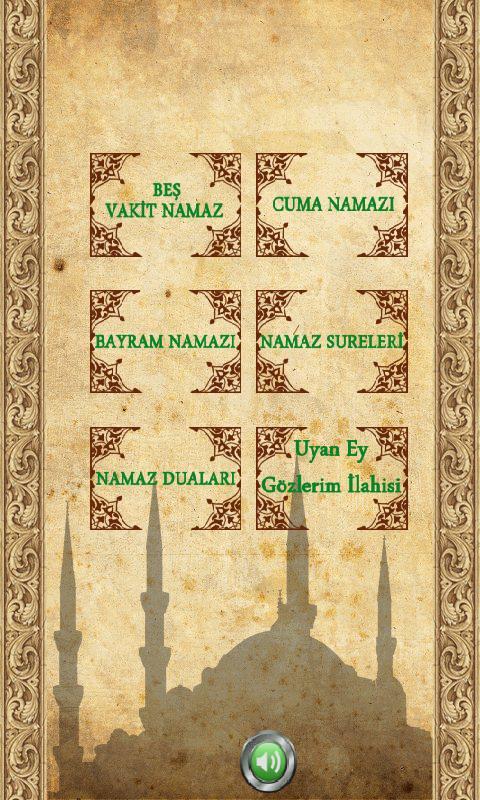
You can find everything about "Prayer" in this program.
You can use our program with peace of mind. All prayer movements and explanations were checked with the documents published by the Ministry of Religious Affairs.
For your requests regarding the program, you can send an email to [email protected].
It contains illustrated and detailed explanations for your children.
✔How to perform the Five Daily Prayer? Illustrated, step-by-step explanation for each movement.
✔How to perform Friday Prayer?
✔What are Prayer Prayers? With Arabic pronunciations and Turkish meanings.
✔What are the Prayer Surahs? With Arabic pronunciations and Turkish meanings.
✔How to perform the Eid Prayer, step by step explanation.
It is obligatory for every Muslim who has reached the age of maturity to pray five times a day. When the time for a prayer comes, it becomes obligatory for him to perform it when he starts performing it. If he did not perform it, it becomes obligatory for him to perform it at the end of the prayer time, that is, when there is enough time to perform ablution and start praying.
If there is no excuse and there is no time to perform the prayer, it will be a grave sin. It is obligatory for both those who have an excuse and those who do not to make qada. It is obligatory for a new Muslim to first learn the conditions of prayer. After learning it, it becomes obligatory to perform it.
What does Allah (cc) say about Prayer in the Quran?
1. "Surely prayer prevents from indecency and evil."
Ankebut Surah (29), 45
The meaning of the entire verse is as follows: "Read the book that has been revealed to you and perform prayer. Indeed, prayer prevents from indecency and evil. Remembering Allah is certainly the greatest worship. Allah knows what you do."
The meaning of the words "fahsha" and "munkar", which are translated as indecency and evil in the verse, is more comprehensive. Prostitution is a word that expresses all ugliness, rudeness and immoral behavior committed openly and publicly. Munkar is also used to express all inappropriate behaviors and sins that the mind and sharia do not like. First of all, such things are not done during prayer, prayer is performed by complying with all the decency required by it. A prayer that is performed consciously, knowing its truth, being aware of what it is, and knowing what it is, prevents a person from all kinds of ugliness, inappropriate behavior, and immoral acts outside of prayer. That's why our Prophet Muhammad said: "Whoever prays and that prayer does not prevent himself from indecency and evil, that prayer will at most make him move further away from Allah" (Münavi, Feyzü'l-kadir, VI, 221). The Quran has many verses about prayer. The reason why Nawawi is content with just this verse regarding the subject must be due to its comprehensiveness.
2. "Continue to pray, especially the middle prayer."
Surah Baqarah (2), 238
It is necessary to perform the five daily prayers completely and without interruption. Because the word preservation in the verse includes features such as performing prayers completely, in the most perfect way and on time. In addition, we must perform prayer by fulfilling all its pillars and conditions. Because the command in the continuation of the verse, "Rise up and stand in prayer for the sake of Allah" requires this. The term kunut used here expresses obedience, reverence, submission and standing, which in our language is called standing sofa. Our Prophet Muhammad SAW said: "The most virtuous prayer is the one whose qunutu is long" (Muslim, Musafirin 164-165).
Read more